Ten Thousand Readers, Zero Coworkers: The Hidden Loneliness of Going Independent
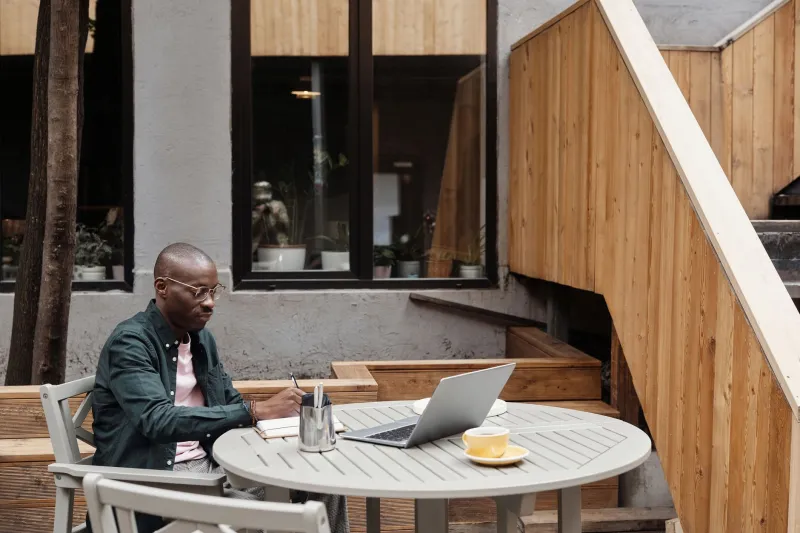
Somewhere in Portland, Oregon, a writer named Simone is starting her Tuesday the same way she's started most Tuesdays for the past three years. Coffee. Laptop. The particular silence of a home office at 7 a.m. She'll write for four hours, respond to reader emails, schedule social posts, check her subscriber numbers, and probably eat lunch at her desk. She'll talk to no one in person until her partner gets home at six.
Her newsletter has 11,400 subscribers. She earns a full-time income from it. By every external measure, she's built exactly the kind of independent media career that gets written about admiringly on Twitter and in business publications.
"I wouldn't trade it," she says. And then, after a pause: "But there are days when I realize I haven't had a real conversation with another person who does what I do in weeks. That's a strange thing to sit with."
It's a strange thing that a lot of independent creators are sitting with — and increasingly, starting to say out loud.
The Freedom Nobody Warned You About
The narrative around independent journalism and creator careers is almost relentlessly optimistic. Escape the toxic newsroom. Own your work. Build direct relationships with your audience. Set your own hours. It's a compelling pitch, and it's not wrong — the people who've built sustainable solo careers will mostly tell you it's genuinely better than what came before.
But the pitch tends to skip the part where you spend eight hours alone in a room, making every decision yourself, with no one to bounce ideas off of, no one to tell you when something isn't landing, and no one who truly understands the specific pressure of being entirely responsible for your own professional survival.
The loneliness of independent creative work isn't a character flaw or a sign that someone chose wrong. It's structural. It's baked into the model. And it accumulates.
What Burnout Looks Like When There's No HR Department
In a traditional newsroom, burnout has some visibility. Colleagues notice. Managers (in theory) intervene. There are systems — imperfect, often inadequate, but at least present — for recognizing when someone is running on empty.
For solo creators, burnout is largely invisible until it isn't. The newsletter still goes out because readers are expecting it. The podcast still drops because the feed needs feeding. There's no one to cover for you, no one to tell you to take a week off, and often no financial cushion that would make taking a week off feel safe.
Darius Holloway has been writing a newsletter about criminal justice reform for four years. He built it from nothing to over 8,000 subscribers while holding down a part-time job. Last year, he hit a wall.
"I couldn't tell anyone I was struggling because the whole brand of what I do is that I'm this relentless, passionate person," he says. "If I said I was exhausted and didn't want to write, what did that mean? Would people stop trusting me? Would they unsubscribe? I didn't know. So I just kept going."
He eventually took a two-week break, lost about 200 subscribers, and came back with what he describes as a more honest relationship with his audience. He now writes openly about the difficulty of the work. His engagement went up.
Imposter Syndrome in a Room With No Mirror
One of the underappreciated functions of having colleagues is that they reflect you back to yourself. A coworker who says "that piece was really good" carries a certain weight — they know the field, they've seen your other work, they're not just being polite.
When you work alone, that feedback loop collapses. Reader emails are wonderful, but they come from people who already like you enough to write in. The silence of people who didn't engage tells you nothing specific. And the internal critic — the voice that says you're not actually that good, you just got lucky — has no real opposition.
Amanda Yee, who writes about Asian American cultural identity and has a following of roughly 15,000 across her newsletter and podcast, describes imposter syndrome as her most persistent occupational hazard.
"Every time something goes well — a big open rate, a piece that gets shared widely — there's about twenty minutes of satisfaction and then this wave of 'when are people going to figure out I don't know what I'm doing," she says. "In an office, your colleagues know what you're doing. They've watched you do it. Out here, you're just performing confidence and hoping no one notices you're also terrified."
The Community Solutions Some Creators Are Building
The good news — and there is some — is that independent creators are increasingly building the support structures they couldn't find inside institutions.
Peer groups have become one of the most common coping mechanisms. Small, informal cohorts of independent journalists and creators who meet weekly or biweekly over video call to share what they're working on, what's not working, and occasionally just to vent. These groups don't solve the structural isolation, but they interrupt it.
Some larger creator communities have formalized this. Slack groups organized around specific niches — local news, health journalism, culture writing — function as ad-hoc newsrooms where members workshop pitches, share subscriber strategies, and offer the kind of ambient professional companionship that an office once provided.
Simone, back in Portland, joined one of these groups eight months ago. She describes it as a turning point.
"The first time someone in the group said 'I feel like I'm just talking into a void sometimes,' I almost cried," she says. "Not because it's sad, but because I'd been thinking that exact thing for two years and assumed it meant something was wrong with me. Turns out it's just Tuesday."
Talking About It More
What's shifting, slowly, is the willingness to name this publicly. For a long time, admitting to loneliness or burnout felt dangerous for independent creators — like it would undermine the aspirational image that keeps readers engaged and paying. The persona of the confident, thriving, free-range journalist is a product as much as it is a person.
But audiences, it turns out, tend to respond to honesty better than polish. Creators who've written openly about the hard parts of working alone often report that it deepens their reader relationships rather than damaging them. The vulnerability lands. It reminds people that there's a human being on the other end of the newsletter, not a content machine.
For anyone considering the leap to independent media, or already in it and feeling more isolated than they expected: you're not doing it wrong. The loneliness is real, it's common, and it doesn't mean the work isn't worth doing.
It just means you might need to find your Tuesday people.