Who Checks the Checkers? Inside the DIY Fact-Finding Networks Indie Journalists Are Building From Scratch
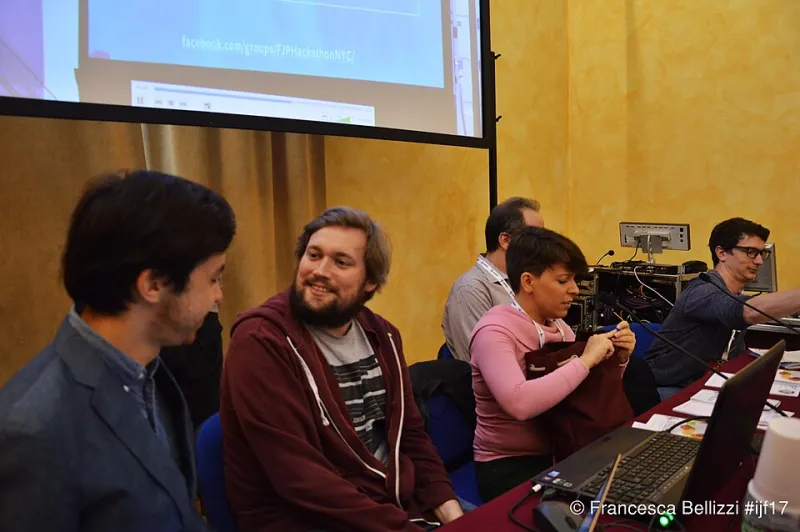
Photo: International Journalism Festival, CC BY-SA 2.0, via Wikimedia Commons
For decades, the implicit deal in American journalism was simple: big institutions had the resources to verify things, and everyone else just had to trust them. That deal is fraying. Legacy fact-checking organizations face shrinking budgets, political credibility questions, and a pace of news that makes thorough verification feel like a luxury. Into that gap, something unexpected is growing — loosely organized, deeply collaborative networks of independent journalists who are figuring out how to check each other's work without a newsroom, a managing editor, or a corporate mandate.
It's scrappy. It's sometimes chaotic. And it might actually be working.
The Problem With Institutional Fact-Checking
Organizations like PolitiFact and FactCheck.org have done genuinely important work over the years. Nobody's disputing that. But they're also operating under structural constraints that make comprehensive coverage nearly impossible. They're centralized, which means they're limited by geography, staff capacity, and editorial priorities. A misleading claim from a city council meeting in rural Ohio isn't going to make their queue anytime soon.
And then there's the credibility problem. A significant portion of American news consumers — across the political spectrum — view major fact-checking organizations as ideologically biased, whether or not that perception is accurate. When the messenger is distrusted, the message doesn't land. That's not a knock on individual fact-checkers, many of whom are doing rigorous, principled work. It's a structural reality that independent journalists are having to navigate around.
"The trust gap is real," says one newsletter writer covering state-level politics in the Midwest who asked not to be named because they're still building source relationships. "My readers don't always believe PolitiFact. But they'll believe me if I show my work, because they know me. They've been reading me for two years. That relationship is doing work that an institution can't easily replicate."
What a Decentralized Verification Network Actually Looks Like
There's no single blueprint here, which is part of what makes this movement interesting and part of what makes it hard to describe cleanly. Some of these networks are formal — shared Slack channels, agreed-upon verification protocols, rotating peer review arrangements between half a dozen independent outlets. Others are almost entirely informal: a group text between journalists who cover overlapping beats, a habit of calling a trusted colleague before publishing something that feels shaky.
What they share is a logic of distributed expertise. One independent journalist might have deep knowledge of local real estate deals but limited fluency in financial document analysis. Another might be excellent at tracking social media provenance but have no contacts inside local government. Together, they cover each other's blind spots in a way that no single person working alone ever could.
Some groups have started building shared document repositories — essentially collaborative evidence lockers where verified information on recurring subjects (local officials, regional companies, repeat public figures) can be accessed by any member of the network. Think of it as a decentralized institutional memory, the kind that used to live inside a newspaper's morgue files.
The Audience as a Verification Resource
One of the more surprising developments in this space is how deliberately some indie journalists are tapping their own readership as a verification layer. This isn't crowdsourcing in the sloppy, "let Twitter sort it out" sense. It's more deliberate than that.
Several independent publishers have started building what you might call structured reader verification systems — explicit invitations for readers with relevant expertise to flag errors, contribute documentation, or push back on conclusions before a piece is finalized. A journalist covering agricultural policy might have 4,000 subscribers, and among those 4,000 people there are probably a few dozen farmers, agronomists, lobbyists, and USDA staffers who know things the journalist doesn't.
The trick is creating a culture where that feedback is welcomed rather than defensive, and where the journalist maintains editorial control rather than simply deferring to whoever yells loudest. That's a genuinely hard balance to strike. But the indie journalists doing it well describe it as one of the most valuable editorial tools they have.
What This Means for the Future of Accountability Journalism
Let's be honest about the limitations here. Decentralized verification networks are only as good as the people in them. There's no institutional accountability if someone cuts corners, no HR department, no legal team, no ombudsman. The reputational stakes are high — a bad call can tank a journalist's credibility overnight — but the structural guardrails are minimal.
And these networks require ongoing maintenance. Relationships have to be cultivated. Trust has to be built and rebuilt. People get busy, move on, or disagree about standards. The informal networks that work beautifully today can dissolve quietly if the key connector in the group burns out or loses interest.
But there's something genuinely compelling about what's emerging here. The old model concentrated verification power in a small number of institutions with limited reach and, increasingly, limited public trust. The new model distributes that power across a wider network of journalists with deep local knowledge, specific subject expertise, and direct relationships with the communities they cover.
It's not a replacement for rigorous institutional journalism. It's something different — more granular, more relational, more dependent on individual reputation than organizational brand. Whether that ends up being a strength or a vulnerability probably depends on who you ask.
What's clear is that independent journalists aren't sitting around waiting for the verification infrastructure to be handed to them. They're building it themselves, one Slack channel and one shared Google Doc at a time. That's a very NewPubli kind of story.