Your News Feed Is 19 Years Old and It's Covering Things CNN Missed
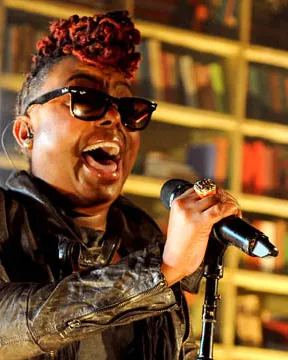
Photo: Lunchbox LP from Culver City, CA, USA, CC BY 2.0, via Wikimedia Commons
Somewhere right now, a college sophomore with a ring light and a decent phone is breaking a story that a major television network will pick up in about six hours, credit vaguely as "social media reports," and present to their audience as if they discovered it themselves. This is not a hypothetical. It has happened enough times that it's become a recognizable pattern.
And yet the journalism establishment — or what's left of it — continues to debate whether what young creators are doing on TikTok and Instagram actually qualifies as the real thing. It's a debate that says more about institutional anxiety than it does about the quality of the work.
What "Breaking It First" Actually Means Now
Let's start with what's undeniably true: Gen Z creators have broken major stories first. Coverage of protests, police incidents, campus events, local disasters, and cultural moments has repeatedly originated on short-form video platforms before landing in traditional newsrooms. The January 6th Capitol riot was documented in real time by people who were there with phones before most TV cameras arrived. Racial justice protests in 2020 were covered with granular, on-the-ground detail by creators who were part of the communities being covered, not parachute journalists flying in from coastal bureaus.
This matters because firstness has always mattered in journalism. Being there, documenting accurately, getting it out — those are foundational. The fact that the distribution channel is a 60-second vertical video rather than a wire dispatch doesn't automatically make the content less valuable.
What it does change is the context. A wire dispatch comes with an institutional byline that implies a certain editorial process. A TikTok comes with a creator's personal brand, which might mean anything from rigorous self-trained journalism to someone who just really wants views. The audience often can't tell the difference, and that's a legitimate problem worth taking seriously.
The Speed-Accuracy Tradeoff Is Real, But It's Not New
The loudest criticism of Gen Z journalism is that it prioritizes speed over accuracy — that the incentive to go viral overrides the instinct to verify. This criticism is fair in specific cases and overstated as a generalization.
Here's the thing: mainstream media has been getting things wrong in the race to be first for as long as mainstream media has existed. Cable news spent years perfecting the art of the confident, incorrect breaking news chyron. Newspapers have issued corrections since newspapers existed. The pressure to publish before you're fully certain is not a TikTok invention. It's a journalism invention.
What is different is the feedback loop. When a young creator gets something wrong on social media, the correction — or the pile-on — happens in public, in real time, in the comments. That's uncomfortable and sometimes brutal. But it's also, in a weird way, more transparent than a quiet correction buried at the bottom of a website three days later.
Some Gen Z journalists have gotten surprisingly good at on-platform transparency — posting follow-up videos that correct earlier claims, pinning clarifications in comments, explicitly flagging when something is still developing versus confirmed. That's not a lesser version of journalistic ethics. It's a different implementation of the same underlying values.
The Gatekeeping Question Nobody Wants to Answer Honestly
When established journalists express skepticism about young creators, they're sometimes raising legitimate concerns about standards, verification, and accountability. But sometimes — and this is the part that's uncomfortable to say out loud — they're protecting professional territory.
Journalism has historically been one of the more accessible professions in theory (no licensing required, no bar exam) and one of the less accessible in practice (you need the right internships, the right city, the right connections, the right unpaid labor period before you get paid). Gen Z creators, many of whom couldn't get a foot in the door at traditional outlets, built their own doors. That's threatening to people whose professional identity is tied to the existing door.
This doesn't mean every young creator is a journalist. It means the distinction between "real journalist" and "not a real journalist" has always been more about gatekeeping than about any coherent set of standards — and that the gates are now much, much harder to maintain.
What the Old Guard Is Actually Getting Right
None of this means the skepticism is entirely misplaced. There are genuine things that traditional journalism training and institutional infrastructure provide that individual creators on social platforms often lack: legal protection, source protection, editorial oversight, institutional accountability when things go wrong.
A 20-year-old with 800,000 TikTok followers covering a local corruption story has very little protection if a powerful subject decides to come after them. No legal team, no press freedom organization on speed dial, no editor who's been through this before. That's a real vulnerability, and it matters.
The honest version of this conversation acknowledges both sides. Young creators are doing legitimate journalism, often courageously and well. They're also operating without safety nets that exist for reasons. The goal shouldn't be to decide who's a "real" journalist. It should be to figure out how to extend more of those protections to everyone doing the work — regardless of their age, their platform, or whether they've ever set foot in a J-school classroom.